The Handmaid’s Tale and the Economy of Names

“My name isn’t Offred, I have another name, which nobody uses now because it’s forbidden. I tell myself it doesn’t matter, your name is like your telephone number, useful only to others; but what I tell myself is wrong, it does matter.”

Margaret Atwood’s dystopian novel reveals a world horrifying in its details yet undeniably familiar, like an old plaything abandoned only to be recovered decades later, faintly recognizable, a symbol of a distant place that does not exist in present time. Her Republic of Gilead illuminates realities and potentialities, extrapolating truths of our histories and refashioning them together.

One such actuality is the economy of names that informs, dictates, and prescribes human value, severally and collectively. To name something is to exercise power over it. We name our children because they are “ours.” We name people, pets, places, and every other tangible and intangible substance in a desperate effort to give order to the things within our reach.

When we gift to someone a nickname, we grant them high value in our inner economy. They have been initiated. They have so climbed the ranks as to achieve a new name — one that is specific to this social group and a private praise that cries “I have known you, and I will keep you.”

The contrary occurs when we yoke someone with an insulting or vulgar “nickname.” They become so repulsive, so abject that their identity is no longer introduced by their birth name, but by this newly-given demotion, this social marker that tells the others that this one is below us.

So also with titles, yet with a bolder intensity. Our accomplishments — our arbitrary victories of scholarship or employment — are so highly valued in the economy of names that they precede them. Doctor Smith. Senator Carrey. Attorney Stone.

Offred, by the structure of her name, uncovers immediately the possessive power of names. Her name announces through the economy of names, “I am of Fred. He is my identity now.” And her title is Handmaid, a collective title that translates in the economy to a dispensable product, an object for persons rather than a person herself.

She meditates on her former name as it fosters a pocket of rebellious freedom. A black market in the Gilead economy of names. She still has something that they can’t control, can’t reorder. Yet the Reader never learns her “real” name. Perhaps, because that isn’t her real name. Perhaps, because that person died for Offred to form. Perhaps, because we wouldn’t know the value of her name even if she told us.

  • What other powers or consequences can be found in names?

If you haven’t read Atwood’s The Handmaid’s Tale, you can purchase it here. The piece is earth-shattering, eye-opening, and perspective-changing.

_________________________

We are a participant in the Amazon Services LLC Associates Program, an affiliate advertising program designed to provide a means for us to earn fees by linking to Amazon.com and affiliated sites. As an Amazon Associate, I earn from qualifying purchases.

On Possession

I said she was mine
and he was mine.
They were mine.
And I swallowed them whole,
cherishing the explosive flavor of control.

Then, He came,
and pulled them from my throat.
He told me they were His.
They were all His.

But he didn’t devour them.
What kind of revolution is this?

Strong Language

____________________

We are a participant in the Amazon Services LLC Associates Program, an affiliate advertising program designed to provide a means for us to earn fees by linking to Amazon.com and affiliated sites. As an Amazon Associate, I earn from qualifying purchases

Firestone Friday – Poem IV

When I sigh, heavily, in the morning,
my lungs breathe your name.

As my legs stand,
my joints ache your pain.

While I work and I toil,
my back lifts your blame.

When I sigh, heavily, at dusk,
my lungs breathe your name.

Strong Language

____________________________

We are a participant in the Amazon Services LLC Associates Program, an affiliate advertising program designed to provide a means for us to earn fees by linking to Amazon.com and affiliated sites. As an Amazon Associate, I earn from qualifying purchases

On Freedom

The freedom to know, to choose, to turn outward or inward, is the substructure of a mind healthy in its breathing. Cut off from freedom, the mind rebels, reconstructing reality, growing, fostering in acridity, for it is against its wandering, curious nature, a sort of cruel starvation. So, the mut bites, lurches at its captors — to show them they are not as gods and to project what it feels like to be a beast, cornered.

To restrict the font of knowing is nearly oppression without flaw, for it maddens its subjects, yet it undoes itself steadily, constantly, quietly, as it fashions repressed who have less and less to lose until all that is left to lose is nothing, and control expires.

Wordsmith Wednesday – Poem III

Praise to poetry
for expression,
for its cure to depression —
for the wild thoughts it raises
for its universal phrases –

for culture and for flavor
for being a mental place saver —
for fervor and reflection
for emotional resurrection.

Strong Language

___________________________

We are a participant in the Amazon Services LLC Associates Program, an affiliate advertising program designed to provide a means for us to earn fees by linking to Amazon.com and affiliated sites.

Touchstone Tuesday – Poem I

This time is deceit
for I’ve felt eternity
in my longing for you
and an immortality in your love.
So, external time withers,
for all time is within you.

Strong Language

__________________________

We are a participant in the Amazon Services LLC Associates Program, an affiliate advertising program designed to provide a means for us to earn fees by linking to Amazon.com and affiliated sites.

Firestone Friday – Poem III

The poor cry out;
we close our doors for the noise.

The poor plead;
we slam our windows for the sound.

The poor hope for relief;
we clasp our hearts for the burden.

The poor die.
They should have said something.


Strong Language


____________________

We are a participant in the Amazon Services LLC Associates Program, an affiliate advertising program designed to provide a means for us to earn fees by linking to Amazon.com and affiliated sites.

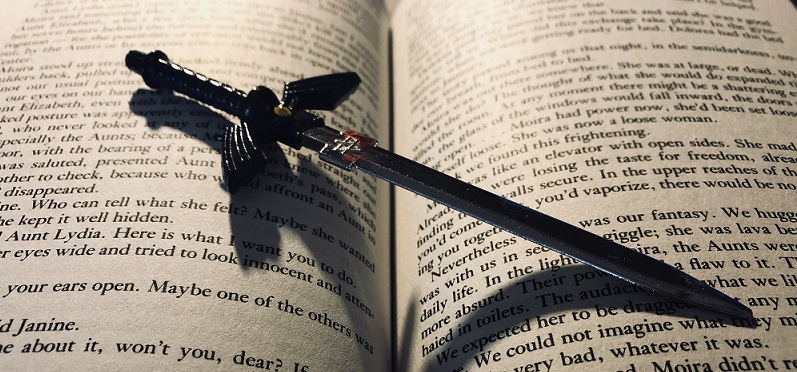
You Can’t Spell ‘Sword’ Without ‘Word’

In our daily lives, we speak loosely, swaying effortlessly in and out of dialects. Our mouths are filled with colloquialisms, slang, humor, and hoards of other speech patterns that make our language seem indirect or common. This is a beautiful reflection of our adaptability — that we can formulate different speech at work, at home, with friends, and even at certain venues. It can, however, allow us to forget that, within this overwhelming wealth of words, all power is hidden.

It is empowering to remember that words create and recreate the world. Armies march at spoken command. Societies operate on the foundations of written law. The beginning of a friendship, the end of a marriage, a religious conversion, and the formation or the fall of a government can all happen at the spur of words. For good or for evil, words transform our lives.

Words are inevitable, undeniable, and unrivaled pathways for knowledge, inspiration, transformation, and, in a ‘word,’ power. How easily we overlook the electrifying potential we all have in our capacity to create words and, thereby, affect minds. Language is so robust that it often trounces reality; what matters is not the truth, but what we believe to be the truth, and that ‘truth’ is delivered through words.

This fills my mind as I read another article about another tragedy. And I am struck, like most readers, with a feeling of staunch helplessness, until I discipline my mind to recall the great power we all have to give life to good in direct response to evil. As long as we can create words, we can change minds. As long as we can change minds, we can change behavior. And, as long as we still have the opportunity to change behavior, we can change it all.